"I hope for a better life — but I need fast orientation and confidence"
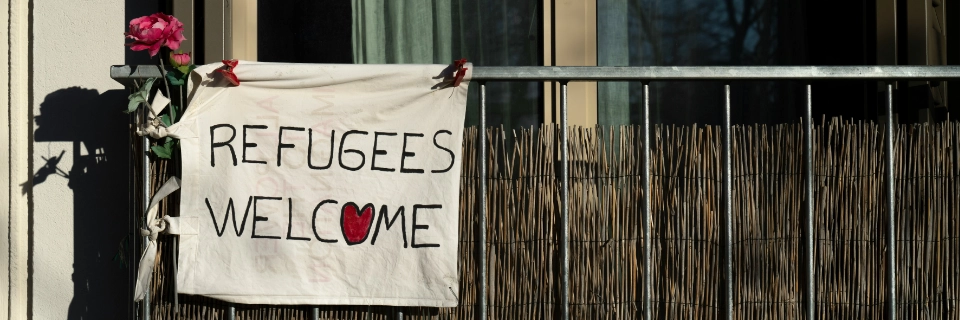
You didn't choose to leave. And you didn't have much time to prepare. Everything is new — the language, the rules, the faces, the way things work. It can feel like you are supposed to know things that nobody has explained to you yet. That is not a personal failure. It is simply where you are right now.
Your strengths
You made it here. That alone took courage — more than most people around you will ever understand. You found a way forward under pressure, without a map, without much help, possibly while looking after others at the same time. You may not feel strong right now. But what you have already done or experienced tells a different story.
What got you here is not luck. It is you.
And how do you feel right now?
Things may feel a little chaotic right now — or a lot chaotic. That is not surprising. What you have been through was not a normal life event. When we experience something that felt threatening, overwhelming, or deeply unfair, our mind and body remember it — even when the danger has passed. What you may be feeling now is not weakness. It may simply be the natural aftermath of something that was genuinely hard.
You may notice things that are difficult to explain to others. A sudden unease in situations that seem harmless. A tiredness that sleep doesn't fully fix. Moments where a small thing — a sound, a smell, an unexpected memory — brings something heavy back to the surface. You may find it hard to trust, hard to relax, or hard to feel safe even when you are. All of this can make perfect sense, given what you have been through.
And underneath all of that, you may wonder: who am I now? Some experiences don't just affect what we feel — they can affect how we see ourselves. You may carry images of yourself from difficult moments that don't reflect who you truly are. Moments where you had no good options. Moments you wish had been different. That version of you — in that moment — deserves more understanding than you may have been giving yourself.
Finding orientation — imagining your way forward
When everything is new and unclear, it can be hard to know where to start. Not because you are not capable — but because orientation takes time, and nobody can figure out a new world overnight. You may feel like you are always reacting, always catching up, never quite ahead of things.
What often helps is not trying to solve everything at once — but finding one clear picture of where you want to go. Even a small, simple image of what your life could look like in a year can give you direction. And once you have that picture, the first small steps become much easier to see.
A simple exercise: a letter from your future self
Take a few minutes and imagine: it is one year from now. Things have settled a little. You feel more at home. What does a normal Tuesday look like for you? Where are you? What are you doing? Who is around you?
Write a few lines — as if you are writing a letter from that future moment back to today. Don't worry about whether it feels realistic. Just let yourself imagine it.
Then ask yourself: what would be one very small step, this week, that points in that direction?
You are allowed to miss home — and still move forward
Missing home is not a sign that you made a mistake, or that you are not adapting well enough. It is a sign that you had a life that mattered — people, places, routines that were yours. That doesn't disappear just because you are somewhere new.
Grief can show up in different ways. Sometimes as sadness. Sometimes as irritability, or restlessness, or a strange flatness. Sometimes it arrives in small moments — a familiar smell, a song, a time of day that used to mean something. Whatever it looks like for you, it deserves a little space. Not to dwell — but to be acknowledged.
A small act of remembering
This week, allow yourself one small moment to honour where you came from. Cook something familiar. Look at a photo. Write a few lines to someone you miss — even if you never send it.
You don't have to choose between the past and the future. You are allowed to carry both.
Rewriting the story — you are not defined by what happened to you
Sometimes the hardest thing about a forced move is not the practical challenges — it is the story it leaves behind. And for many people, that story began long before the move itself. It may have started with persecution, with fear, with poverty that left no real choices. It may include things that happened on the way here — a journey that was dangerous, exhausting, or deeply undignified. Things you may have witnessed, or experienced yourself, that no person should have to go through.
These experiences leave marks. Not because you are fragile — but because they were genuinely hard. A story that may now sound something like: I had no choice. I lost everything. I saw things I cannot unsee. I am starting from zero. These thoughts are understandable. But they are not the whole truth — and they may be quietly shaping how you see yourself, and what you believe is possible for you here.
Reimprinting is a gentle way of revisiting a difficult experience — not to erase it, and not to pretend it didn't happen. But to look at it from a different angle. To ask, carefully: what did I actually do in that moment? What does it say about me that I survived it, that I kept going, that I am here now? What would I want someone I love — who had been through the same thing — to believe about themselves?
That shift in perspective doesn't minimise what happened. It reclaims your role in your own story. From someone things happened to — to someone who found a way through. That is not a small thing. That is everything.
A gentle first step: looking back with new eyes
Think of one moment from your migration journey that still feels heavy — a moment you wish had been different, or one you find hard to think about without discomfort.
Now ask yourself, gently: what did I do in that moment that I don't usually give myself credit for? What strength, what care, what small act of courage was present — even there?
You don't have to resolve anything right now. Just notice what comes up when you look at it differently.
If this exercise brings up strong feelings, that is completely normal — and a sign that this topic deserves more than a solo exercise. A coach trained in trauma-sensitive methods can guide you through this process safely and at your own pace.
Feeling stuck? Not sure what your next step is?
If any of this feels familiar — if you are struggling with orientation, with missing home, or with finding yourself again — you don't have to figure it out alone. In a free Chemistry Call we take 20 minutes to understand exactly where you are, and whether coaching could be the right next step for you. No commitment. Just an honest conversation.